U-FS1000
Drone Spoofer GPS System — Fixed Autonomous Navigation Defence
Wall / pole mount
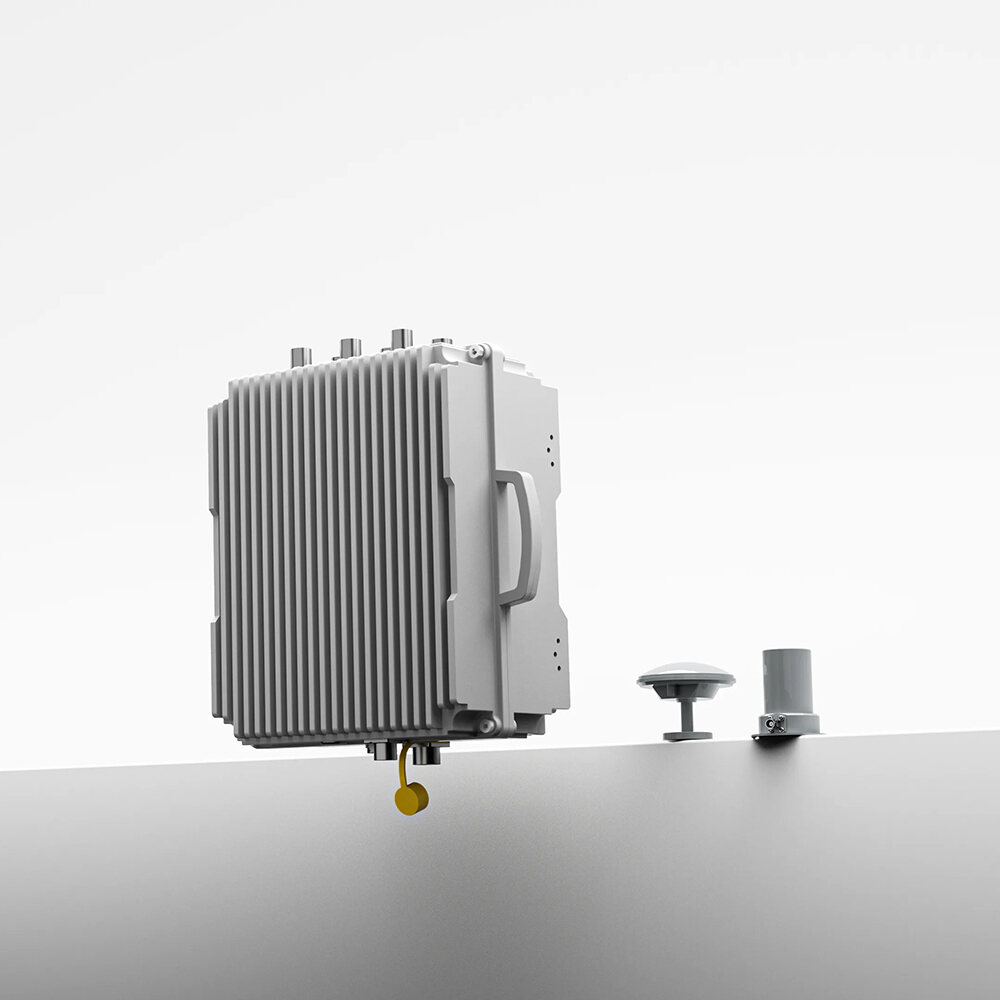
Drone spoofer GPS U-FS1000 is a fixed autonomous navigation deception unit for military bases, airports and nuclear plants, running 24 h unattended with defence and deterrence modes.
How the Drone Spoofer GPS System Operates
Overview
How the Drone Spoofer GPS System Operates
The Drone Spoofer GPS U-FS1000 is a fixed navigation deception system for military units, airports, public security facilities and nuclear plants. It operates autonomously for 24 hours unattended, uses very low power, and can be mounted on a wall or pole without complex installation, offering defence and deterrence modes that protect a defined area from unauthorised drone navigation.
Unlike jammers that simply cut the control link, a drone spoofer system sends crafted satellite-like signals that take over the drone's navigation. The U-FS1000 operates on GPS L1 and GLONASS L1 and can be expanded to BDS B1/B2, Galileo E1/E5a, GPS L2/L5 and other mixed GPS bands. In defence mode it locks the protected coordinates so intruding drones cannot hold their position; in degradation mode it steers drones along a preset trajectory, pushing them away from the protected site before they can be used for surveillance or attack, or into a controlled landing.
Low power and low operating cost are central to this design. The drone spoofer GPS unit is rated at only 40 W, making it one of the most energy-efficient counter-drone devices available, enabling 24-hour autonomous operation on a standard AC supply. The compact control unit mounts quickly on walls or poles, and setup requires no trenching, antenna masts or dedicated shelter. This simplicity is why public security teams choose it to harden remote facilities and temporary operating bases without disrupting existing infrastructure.
Because GPS spoofing is non-kinetic, the U-FS1000 delivers reversible, mission-adaptive effects with minimal operational risk to bystanders. Operators access the system through defence-tested Windows software over an RJ45 port, with full visibility of configuration and engagement logs. Field-programmable frequency options allow the unit to be tailored to regional navigation constellations, all-frequency bands and future drone generations. For airports, utilities and government sites that cannot risk kinetic interception near people, the drone spoofer system is a reliable first line of navigation protection.
Advanced signal generation algorithms simulate realistic satellite ephemeris data, seamlessly capturing the target drone's GNSS receiver without triggering onboard spoofing detection software. This precise control allows operators to define strict geographical boundaries that automatically redirect hostile UAVs away from sensitive airspaces.
With minimal power consumption and robust IP65 weatherproofing, the U-FS1000 can be deployed continuously on remote industrial perimeters, sub-stations, and offshore oil installations. Remote telemetry software enables centralized control across nationwide infrastructure protection networks.
Specifications
System parameters
| Model | U-FS1000 |
| Category | Navigation |
| Form factor | Wall / pole mount |
| Operating range | 500 m-1 km (customizable) |
| Frequency coverage | GPS L1 / GLONASS L1 (expandable) |
| System weight | ≤12 kg |
| Power supply | ≤40 W / AC 220 V |
| Operating temperature | -40 to +70 °C |
| Ingress protection | IP65 |
* Ranges are measured in an unobstructed environment; differences arise due to variations in the environment and the type of equipment.
* Some parameters of the product specifications on this page may be updated; you will be informed before ordering if any change occurs.
Key features
- Defence mode on fixed coordinates, deterrence mode on preset trajectory
- Customizable to BDS B1/B2, Galileo E1/E5a, GPS L2/L5
- 24-hour autonomous operation at ≤40 W
- RJ45 interface, Windows software, no installation required
- Wall or pole mounting, 385 x 310 x 204 mm
Specify the U-FS1000 for your site.
Order inquiryDetection, jamming and deception ranges depend on environment and signal conditions. Specifications from manufacturer datasheets and subject to change.